Flow
A study in material honesty and responsible construction
THE PROBLEM
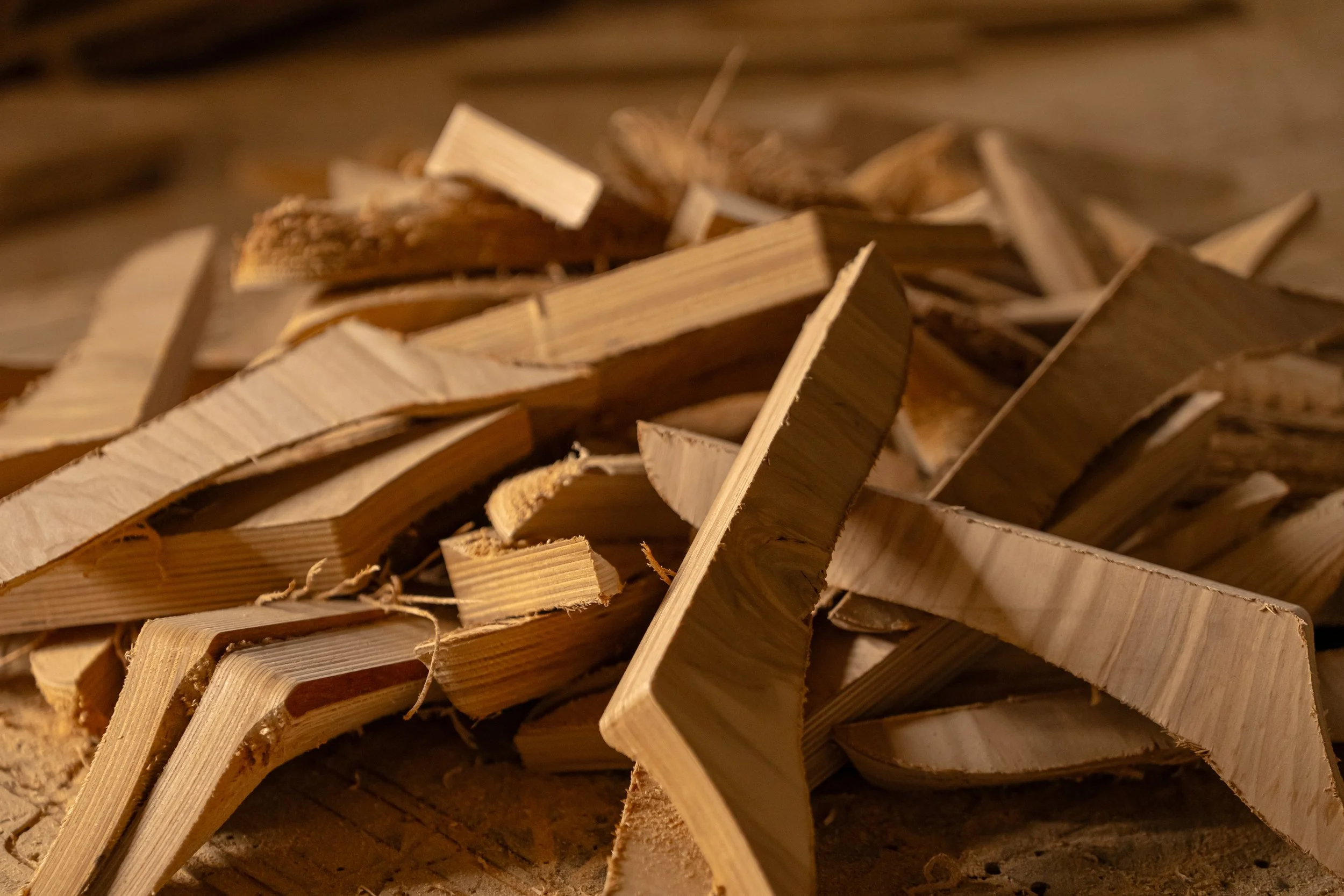
Waste is often the cost of creation, but does it have to be?
Planned obsolescence, excess material, hidden fasteners that make repair impossible. These aren’t accidents, they’re assumptions baked into how most products are made. Flow began as a response to that: a brief to create a sustainable seat that took the problem seriously rather than treating sustainability as an aesthetic or a checkbox. The question wasn’t how to make a chair that looked responsible, it was how to make one that actually was responsible.
THE IDEA
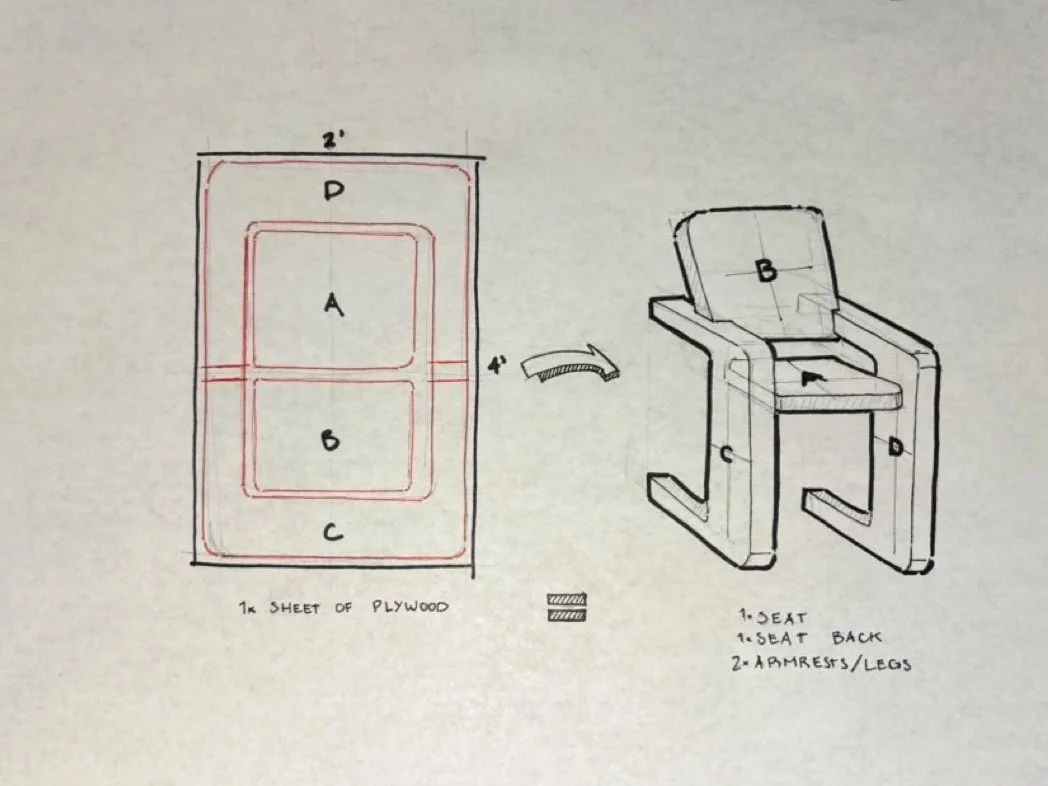
Building from a single sheet of plywood. No offcuts. No waste.
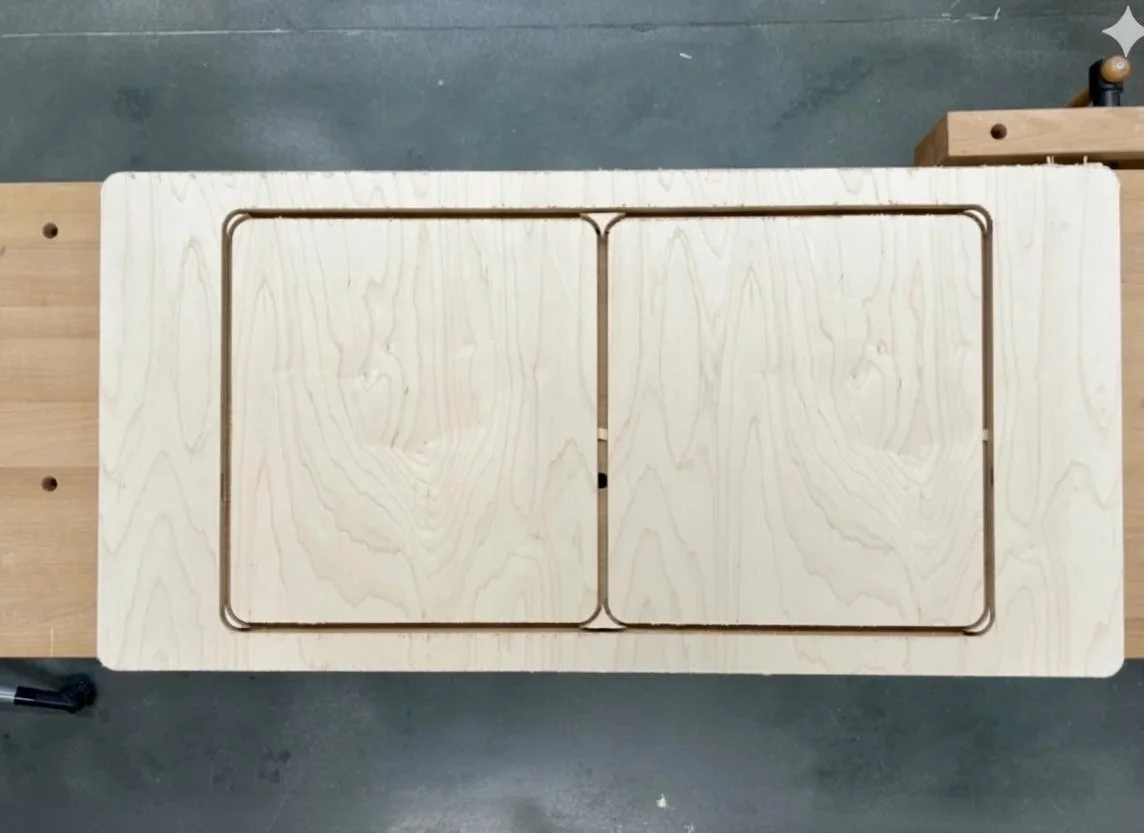
The concept started with a single idea: every component of the chair (seat, seat back, and both arms) cut from one 2’×4’ sheet of plywood. Nothing discarded, nothing hidden. A chair that could account for every piece of material it started with. That constraint held throughout the project — but the material solution it required turned out to be more interesting than the original idea.
ITERATING
Treating unanticipated constraints as a guide, instead of a hindrance.
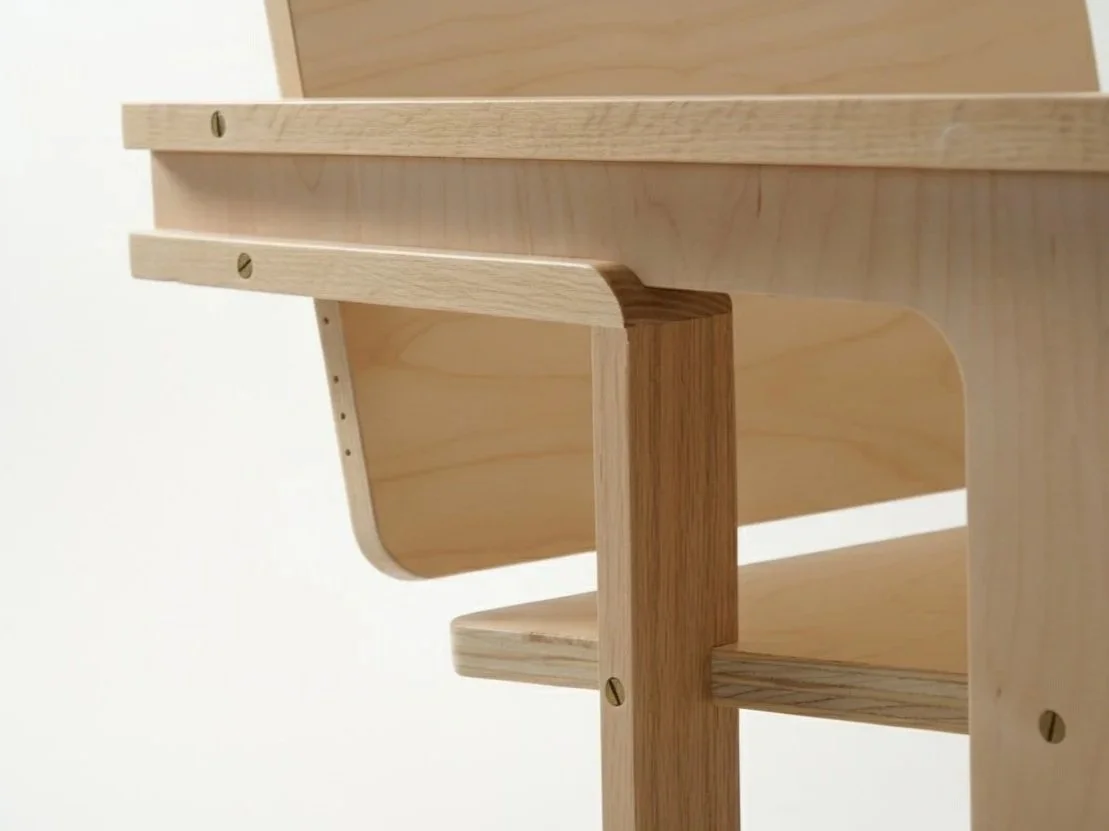
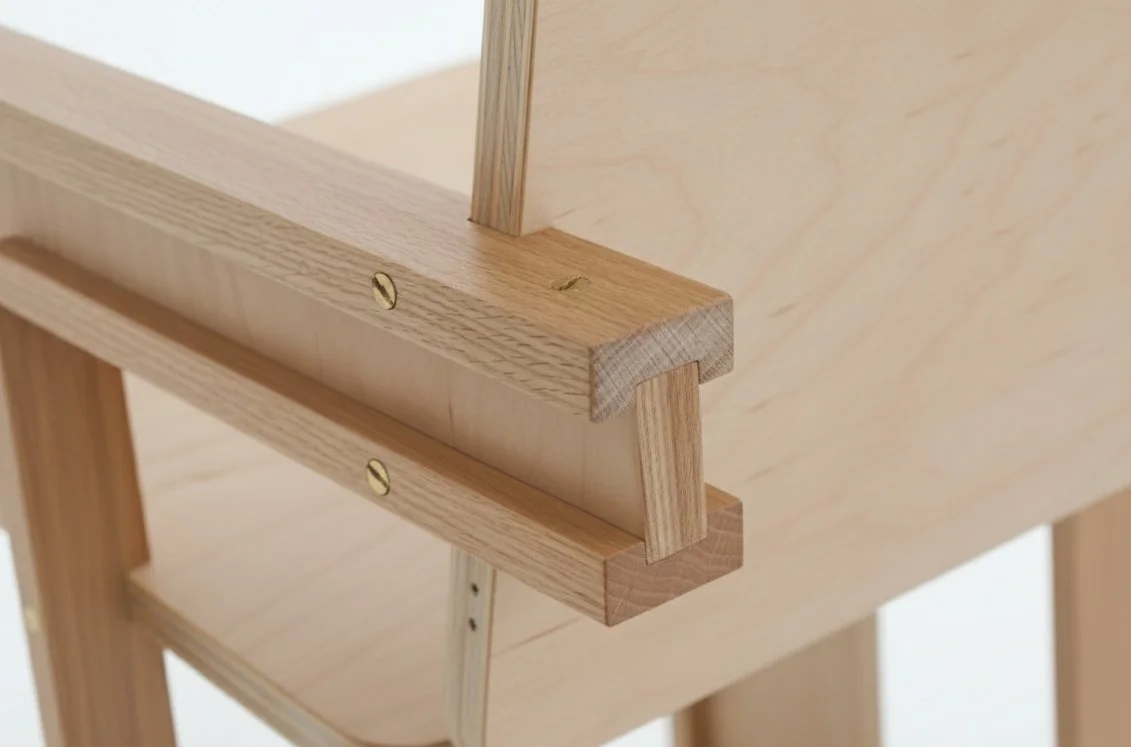
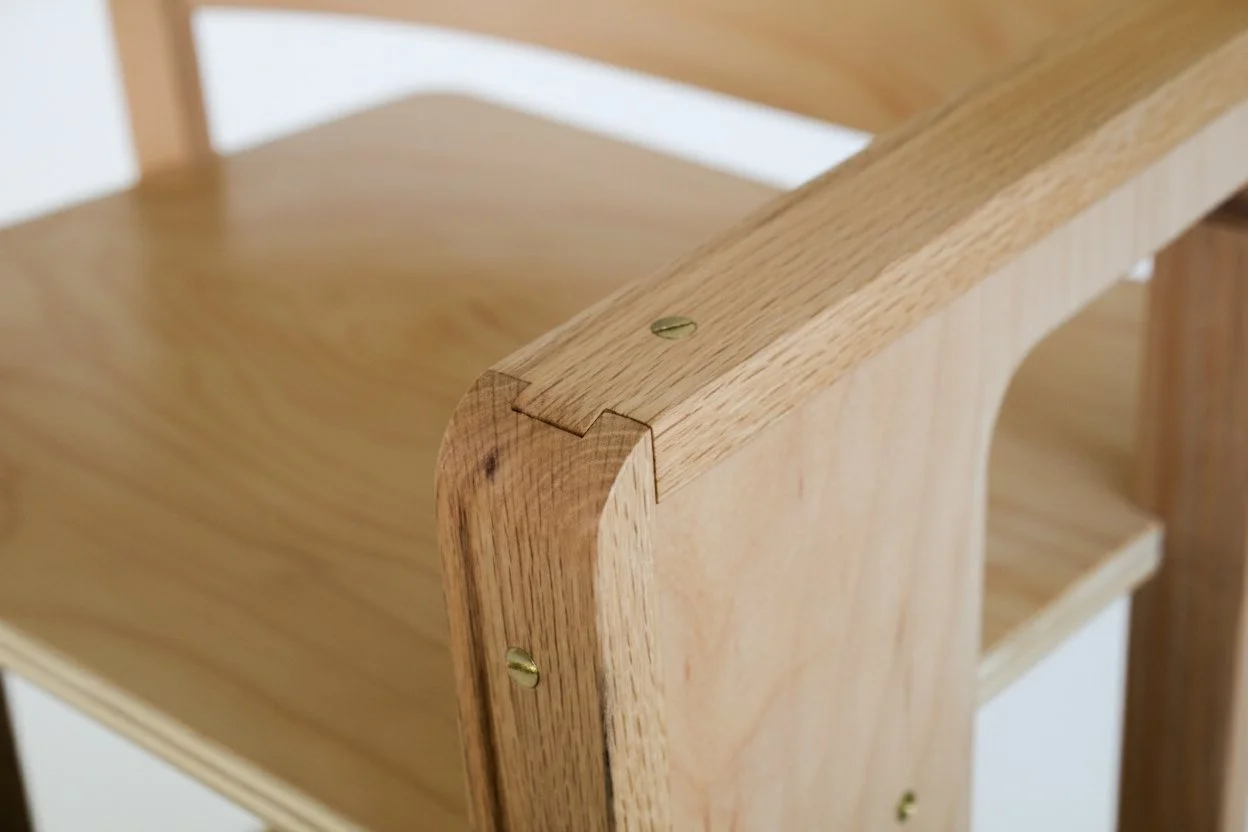
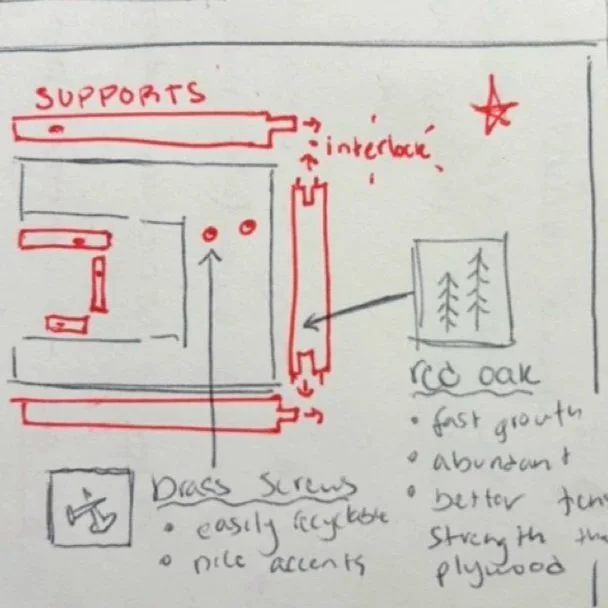
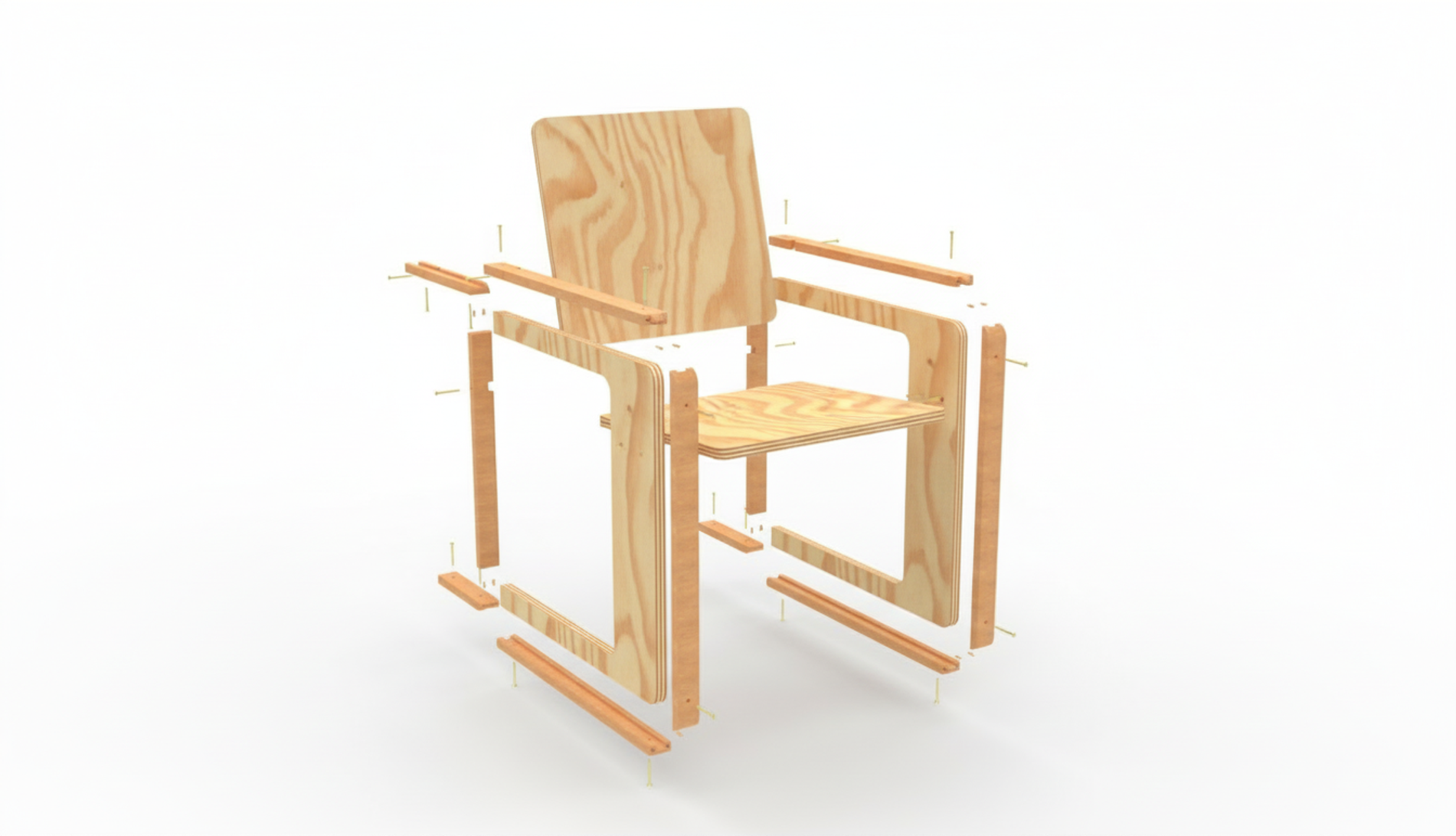
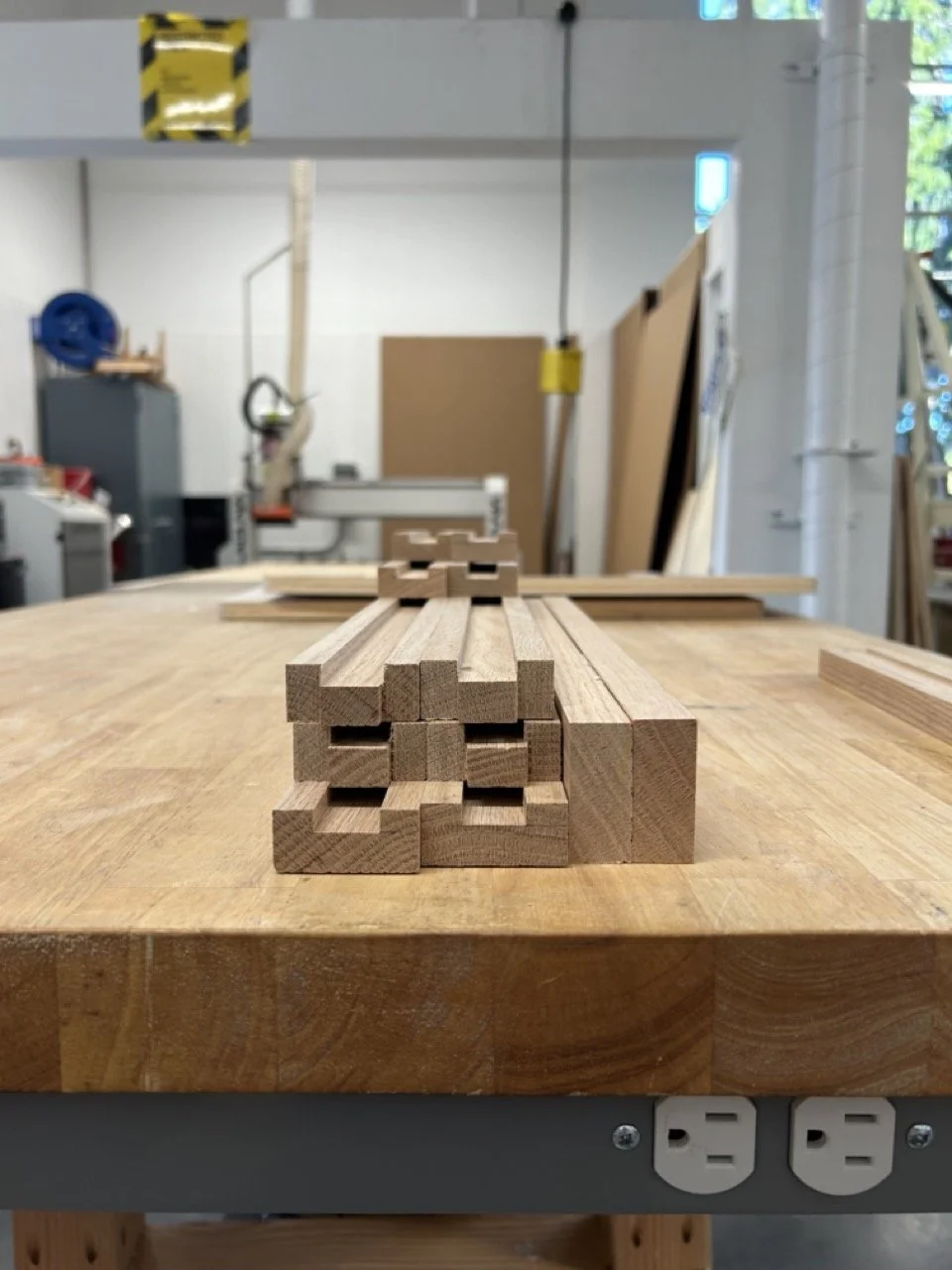
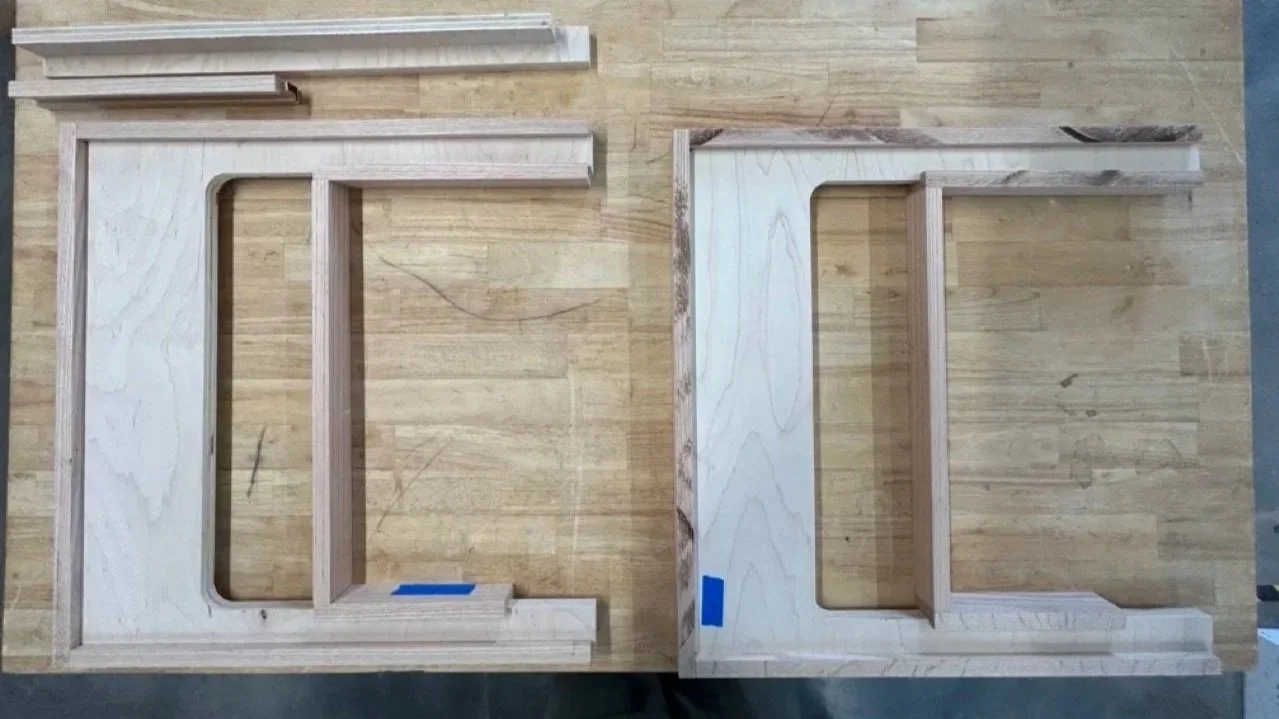
Plywood alone couldn’t carry the structural load, so Red Oak (fast-growing and durable) was chosen to act as supports. Brass screws were chosen with the same intention as they’re easily recycled, and simple enough to assemble and disassemble by hand. Every addition had to justify itself by the same standard; visible, repairable, and honest about how the chair is made.
FABRICATION
Made to be taken apart and put pack together.
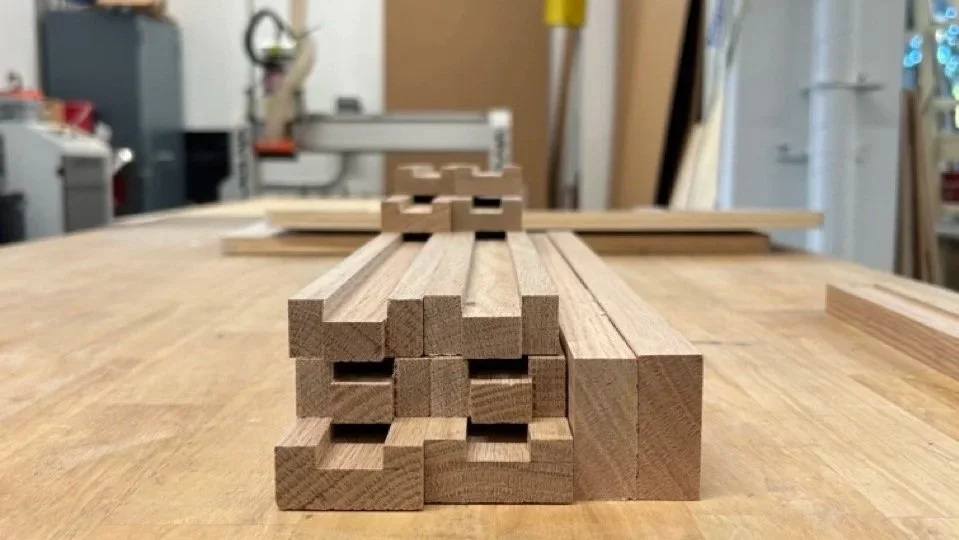
Cut, fitted, and assembled by hand — the oak supports and plywood components come together through the same construction logic from first joint to last screw.
THE WORK
Hands-on making using circular thinking and consistent materials.
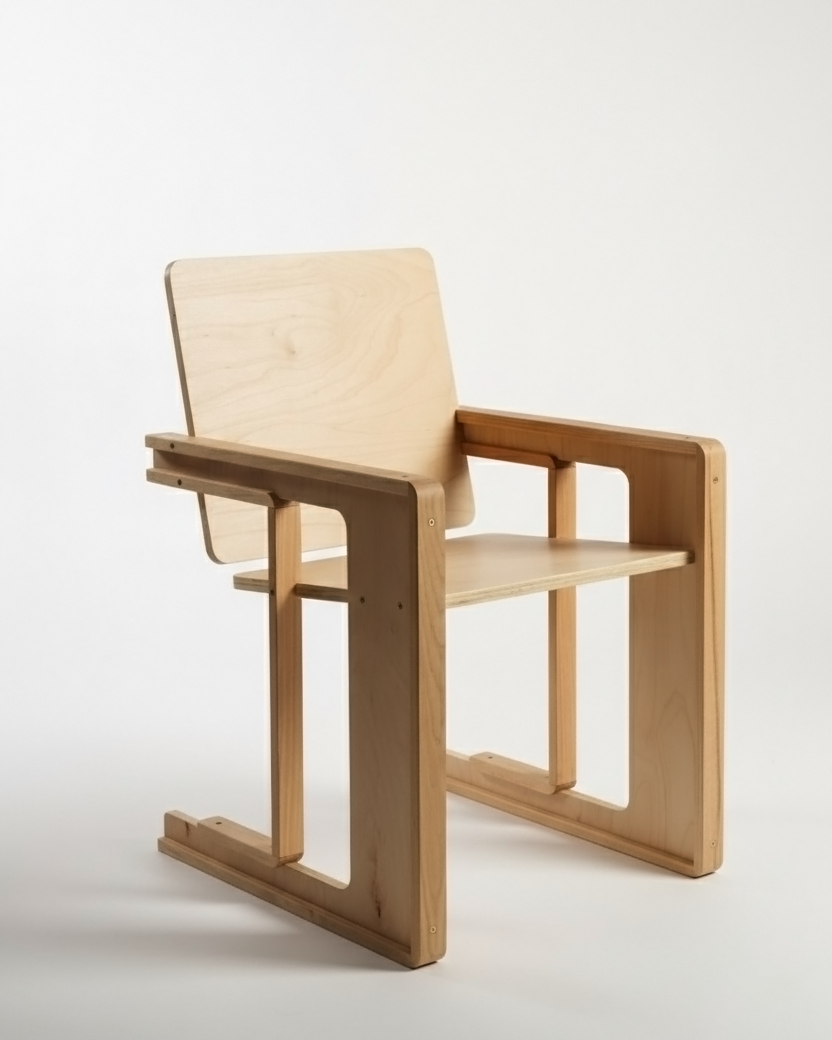
Flow is a proof of concept as much as a piece of furniture, showing that circular thinking doesn’t require exotic materials or processes, just consistent decision-making from brief to build. The limitation of our facilities pushed the design somewhere more interesting than the original concept: not a single-material object, but a multi-material one where every component earns its place. That principle feels worth carrying forward.